BC Place – Session 3, Tuesday, May 30, 2006 from 10:30 – 12:00
Abstract Title: From Farm to Fingers – A BC School Fruit and Vegetable Snack Program
Presenting Author:
Dr. Patti-Jean Naylor
Assistant Professor, School of Physical Education
University of Victoria
PO Box 3015, STN CSC
Victoria, BC V8W 3P1
Additional Authors:
Brent Warner
BC Ministry of Agriculture and Lands
808 Douglas Street
Victoria, BC V8W 2Z7
Or PO BOX 9120, STN PROV GOVT
Victoria, BC V8W 9B4
Lisa Forster-Coull
Provincial Nutritionists
Healthy Living / Chronic Disease Prevention
BC Ministry of Health
4 t h Floor, 1515 Blanshard Street
Victoria, BC V8W 3C8
Ann Britton
Program Coordinator
BC School Fruit and Vegetable Snack program
BC Agriculture in the Classroom Foundation
1767 Angus Campbell Road
Abbotsford, BC V3G 2M3
Lindsay Babineau
Executive Director
BC Agriculture in the Classroom Foundation
Objective:
To evaluate the impact of twice-weekly delivery of BC fruit or vegetable snacks to elementary students in 10 schools on increased awareness and consumption of BC produce.
Methods:
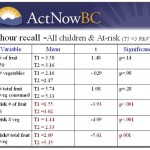
A Provincial Advisory Committee worked with educators, industry and other stakeholders to develop systems and product plans to efficiently and cost-effectively bring fresh BC fruits and vegetables into the classrooms of ten pilot schools. In-school coordinators helped to receive, record and deliver fruit from distributors to classrooms. Coordinator and teacher guides were produced and promotion materials were distributed (e.g. Branded brochures, hand-washing signs, posters, magnets). A quasi-experimental non-equivalent comparison group design was used and student knowledge, attitudes and eating behavior were measured (24 hour recall). Process evaluation included tracking by in-school and provincial coordinators, interviews with teachers, administrators and custodians. BC Agriculture in the Classroom Foundation evaluated product sourcing, pricing, distribution and associated costs.
Results:
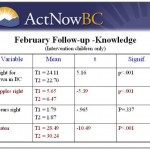
Baseline knowledge and attitudes measures showed that children participating in the project were more likely to have talked about where fruit and vegetables come from with parents (x2 = 7.764, p = .021). Hand-washing before eating wasn’t associated with condition. Control students were more likely to have eaten grapefruit, mango and papaya than intervention students. Results of the February 2006 follow-up evaluation will be presented.
Conclusion:
Findings will examine the feasibility of expanding the program to all 1600 elementary schools by 2010 and possibly all BC schools.
BC Place – Session 3, Tuesday, May 30, 2006 from 10:30 – 12:00
Abstract Title: Making It Happen – Healthy Eating in Schools in BC
Presenting Author:
Rola Zahr
Nutrition Educator
BC Dairy Foundation
3636 Beta Avenue
Burnaby, BC V5G 4K4
Additional Authors:
Lisa Forster-Coull
Provincial Nutritionists
Healthy Living / Chronic Disease Prevention
BC Ministry of Health
4th Floor, 1515 Blanshard Street
Victoria, BC V8W 3C8
Sydney Massey
BC Dairy Foundation
Debbie Leach
Consultant
BC Ministry of Health
1st Floor, 1515 Blanshard Street
Victoria, BC V8W 3C8
Objective:
To evaluate and improve the effectiveness and reach of the Making It Happen toolbox, a three-phase project designed to build capacity among school communities. The toolbox includes three videos and a website on school nutrition policy and practices.
Methods:
• An ongoing project between the BC Ministry of Health, BC Dairy Foundation and Knowledge Network.
• A Public Relations campaign included direct mail flyers and order forms to the target audience and press releases to community media and stakeholders in early 2005.
• A focus testing by a research firm measured the effectiveness of website tools.
• The Dairy Foundation interviewed those who ordered videos to determine their effect.
Results:
• Knowledge Network contributed over $300,000 air time for the videos, monitored website traffic and feedback from viewers.
• Presentations, posters and bookmarks were featured at conferences of teachers, parent advisory committees, school trustees, principals and vice-principals.
• BC Dairy Foundation, DASH and Dietitians of Canada developed a partnership that led to cross-promotional materials featuring the Making it Happen URL.
• Feedback from Phase 1 and focus testing were used to improve website navigation and include new resources such as the 2005 “Guidelines for Food and Beverage Sales in BC Schools.”
Conclusion:
Further research is required to evaluate the project’s effectiveness for building capacity among school communities.
BC Place – Session 2, Monday, May 29, 2006 from 14:00 – 15:30
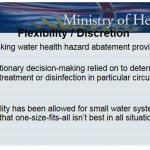
Abstract Title: Modern Public Health Legislation – moving from a prescriptive approach to a health outcomes approach
Presenting Author:
Paul Bailey
Director, Strategic Policy
BC Ministry of Health
4th Floor, 1515 Blanshard Street
Victoria BC V8W 3C8
Additional Authors:
Dr. Ron Dovell
Executive Director, Health Protection
Population Health and Wellness
And
Dr. Brian Emerson
Medical Consultant
Population Health and Wellness
BC Ministry of Health
4th Floor, 1515 Blanshard Street
Victoria BC V8W 3C8
Objective:
To outline the background and process of key steps for modernization of public health legislation in British Columbia.
Background:
Modern public health legislation is necessary to guide government action with respect to assessing and managing risk to the public’s health. During the last quarter of the 20th century, public health legislation and infrastructure in Canada did not kept pace with the rapid changes in biotechnology, globalization, and information technology and as a result, the capacity of public health to respond to the demands placed on it became seriously compromised, as evidenced by the serious recent public health issues such as contamination of water supply in communities in Ontario and Saskatchewan, the spread of West Nile Virus and SARS and increasing concerns regarding food safety. In response to this need, beginning in 2001 the BC Ministry of Health began to modernize its public health legislation.
Results:
Public health legislation is a cornerstone of effective public health service delivery. It provides the powers, duties, and functions for the government, health authorities, and public health officials to do their jobs, and assures the public that government is working
to protect and improve their health. The approach for the development of modern legislation in BC will be presented for discussion in three categories:
1. The context for the need for modern public health legislation in BC
2. Priority needs resulting in four new pieces of legislation
a. Food Safety Act
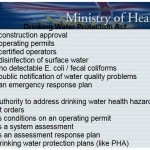
b. Drinking Water Protection Act
c. Community Care and Assisted Living Act
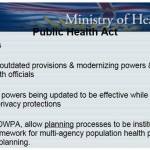
d. Public Health Act.
3. Key challenges and processes in developing public health legislation
Significance of Modern Legislation:
Up-to-date public health legislation is required to protect and improve the health of the population and to influence planning to address issues across the determinants of health.
BC Place – Session 4, Tuesday, May 30, 2006 from 15:00 – 16:30
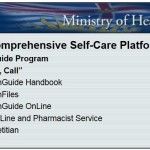
Abstract Title: BC HealthGuide Program – An Integrated Self-Care Platform
Presenting Author:
Kevin Brown
Executive Director, BC HealthGuide Program
BC Ministry of Health
4th Floor, 1515 Blanshard Street
Victoria BC V8W 3C8
Objective:
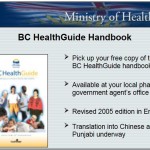
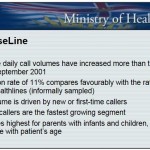
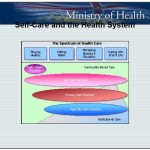
The BC HealthGuide Program is designed to empower consumers to make the right health decisions for themselves and their families. Evidence-based health information, advice and support is provided 24 hours a day, 7 days a week through an integrated suite of print, web and telehealth resources. This presentation will provide an overview of the BC HealthGuide Program and the Ministry of Health’s vision for a comprehensive approach to self-care and health system navigation.
BC Place – Session 2, Monday, May 29, 2006 from 14:00 – 15:30
Abstract Title: Implementing Performance Improvement for Core Public
Health Functions in BC – A Preliminary Report
Presenting Author:
Dr. Trevor Hancock
Public Health Consultant
BC Ministry of Health
4th Floor, 1515 Blanshard Street
Victoria BC V8W 3C8
Additional Authors: Lorna Storbakken
Director, Core Programs Implementation
Population Health and Wellness
BC Ministry of Health
4th Floor, 1515 Blanshard Street
Victoria BC V8W 3C8
Objective:
At the end of this session, participants will have an understanding of the basic concepts of performance in public health, an understanding of how these concepts are being implemented in BC, and the progress to date and the issues raised and lessons learned in the process, as well as an overview of the core programs website.
Background:
The BC Ministry of Health is committed to strengthening and renewing public health in BC. A key part of the strategy has involved defining a set of core public health functions that health authorities are expected to carry out. Now the Ministry is working with the health authorities and the public health field to implement these core functions, using a performance improvement process. This process, which will take place over the next 5 – 6 years, begins with the development of an evidence-based model core program and performance measures for each of the 21 programs. Then each health authority will develop a performance improvement plan with targets tailored to its unique circumstances. The whole process is part of the performance agreement between the Ministry and the health authorities, and is supported by an extensive website. In this presentation, we will present the conceptual and theoretical base for this process, review the progress to date, demonstrate the website, and engage participants in a discussion of performance improvement in public health.
The framework, which was shared with Leadership Council earlier this year, identifies core programs for public health and the key strategies available for their implementation.
The process includes the creation of clear goals, measurable objectives, and an evidentiary base that shows it can improve people’s health and prevent disease, disability and injury in a cost-effective manner. Core programs will be supported through the identification of best practices and national and international benchmarks.
This process, with related roles and responsibilities and work products are described in the Project Charter. The Project Charter and the monitoring tool have been developed in collaboration with PMID. Currently the Charter is with Patricia for review.
The Ministry is contracting experts to develop the evidence papers for the 20 identified core programs. In some cases these contracts are with organizations such as the BC Centre for Disease Control. It is intended these papers will be completed by end of fiscal.
A test website has been created with plans for it to go public in the New Year. This website will have all the resource materials and linkages to performance improvement processes. The intent is to provide the technical support to health professionals and the public in accessing related health status data, the evidence and best practice information, health policy and legislation, benchmarks and performance indicators. Ultimately it is hoped there will be a link to the health authority web pages where they have posted their performance improvement plans related to core programs.
BC Place – Session 1, Monday, May 29, 2006 from 10:30 – 12:00
Abstract Title: ActNow BC – a platform for a cross-sectoral approach to promoting a healthy and active lifestyle – for chronic disease prevention
Presenting Author:
Andrew Hazlewood
Assistant Deputy Minister
Population, Health and Wellness
BC Ministry of Health
4th Floor, 1515 Blanshard Street
Victoria, BC V8W 3C8
Additional Authors:
Wayne Mitic
A/Manager, Chronic Disease Prevention
Healthy Living/Chronic Disease Prevention
BC Ministry of Health
Objective
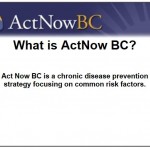
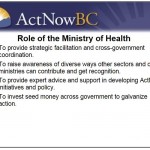
To provide an overview of the approach for the design, development, implementation and evaluation of ActNowBC, as a part of the foundation for the BC Government’s prevention (of chronic disease) and wellness platform.
Background
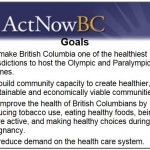
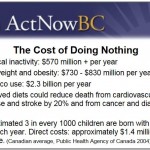
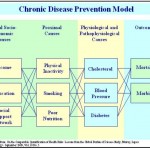
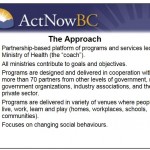
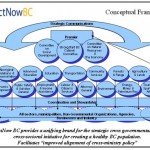
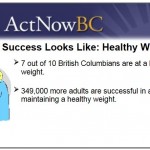
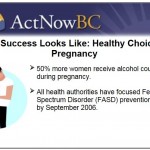
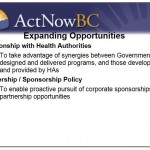
2010 Olympic and Paralympic Winter Games provides an opportunity to take advantage of the enthusiasm associated with the hosting of the Games in BC through an initiative designed to optimize the health of the people of BC. ActNowBC, as a prevention strategy, takes a unique approach to health and wellness – as it targets common risk factors for chronic disease through an integrated approach to reduce the common risk factors of physical inactivity, unhealthy eating, overweight and obesity, tobacco-use and alcohol use during pregnancy. ActNowBC is designed to foster partnerships among several ministries, private industry and NGOs to develop a cross-sectoral collaborative approach to improving health.
Anticipated Results
ActNowBC initiative will motivate and support people to improve their health through initiatives developed and delivered by the provincial and municipal governments, non-government organizations, communities and the private sector, resulting in BC being one of the healthiest jurisdictions to host an Olympic Games.
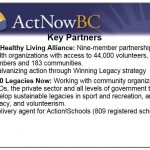
Action Schools! BC
End of 2005 school year: Initial Grade 4 – 7 model roll out resulted in the mobilization of 306 (19 percent) schools and over 600 schools (38 percent) registering to participate (Target was 10% mobilized)
Grade 4 – 7 model in second year of three year phased roll out. Objective to mobilize 40 percent of schools
Kindergarten to Grade 3 and Middle School models developed and piloted in 2005/06 school year
Healthy eating component to be developed and begin pilot in January 2006 for Kindergarten – Grade 9
Secondary School Model to be developed and piloted in September 2006.
Active Communities
Announced at UBCM (Sept)
10 Regional Workshops, Toolkit and Resources (Oct – Nov)
Multi-sectoral Strategic Task Groups (Community Baseline Measurement Tools and Monitoring; Active Workplaces; Everybody Gets to Play – Those living in Poverty)
Community Grants Program ($2,000.00 each; Nov)
The municipal estimates were derived by identifying HSDAs that had similar rates to the province as a whole and then using the population of the municipality to calculate an actual number of individuals. These are crude estimates and should be presented accordingly.
The municipal estimates were derived by identifying HSDAs that had similar rates to the province as a whole and then using the population of the municipality to calculate an actual number of individuals. These are crude estimates and should be presented accordingly
The municipal estimates were derived by identifying HSDAs that had similar rates to the province as a whole and then using the population of the municipality to calculate an actual number of individuals. These are crude estimates and should be presented accordingly.
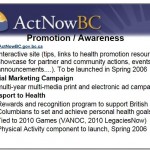
Developing a Website that will be hosted on the Ministry of Health website containing information about Government’s ActNow BC platform and the various programs and partnerships. Most importantly, it will contain information for people about the importance of physical activity, eating healthy foods, and making healthy choices during pregnancy.